
Albanese Government Halves Fuel Excise by 26 Cents a Litre to Ease Petrol Price Pressure
Petrol prices are set to fall by about 26 cents per litre from Wednesday after the federal government announced a temporary cut to fuel excise as part of a broader response to rising fuel costs.
National Cabinet agreed to halve the fuel excise to 26.3 cents per litre for three months starting on April 1, a move expected to cost the federal budget about $2.6 billion.
Prime Minister Anthony Albanese said the measure was designed to provide immediate relief to households and businesses while maintaining stability in fuel supply amid the ongoing conflict in the Middle East and disruptions in the Strait of Hormuz.
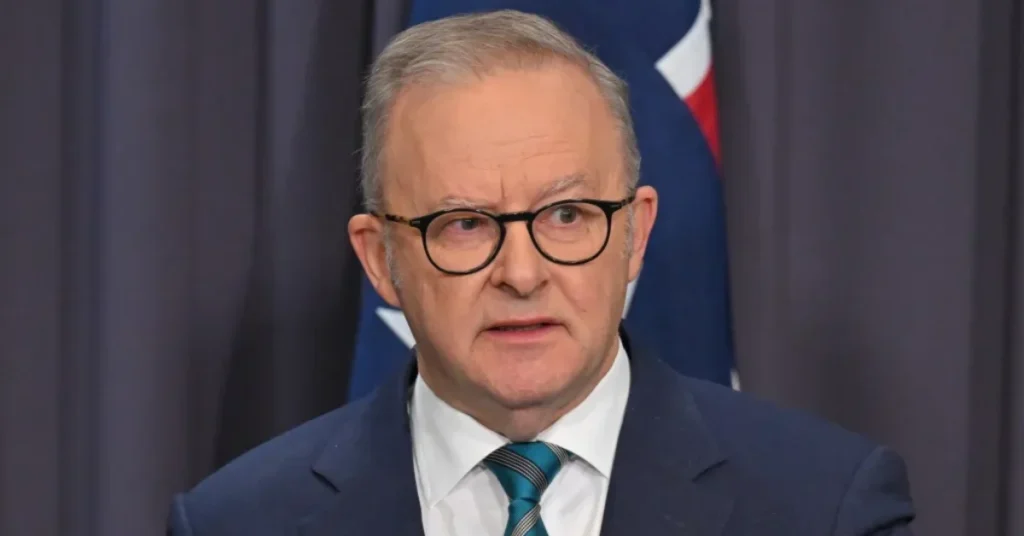
We want Australians to be able to enjoy their Easter and keep the economy moving, he said.
The government also announced a four-stage national fuel security plan aimed at managing supply disruptions and ensuring essential services continue to operate.
Additional relief measures announced
Alongside the excise reduction, the government will temporarily reduce the heavy vehicle road user charge to zero for three months and delay a scheduled increase in the charge.
State governments have also agreed to consider further measures, including potential registration relief and ways to ease the impact of the goods and services tax on fuel. Some states have taken further steps; for instance, Victoria recently announced free public transport for April to encourage residents to save fuel.
Officials said the combined measures were intended to lower transport costs and reduce pressure on households facing rising living expenses.
Fuel security plan outlines response levels
Under the new National Fuel Security Plan, Australia is currently operating at Level Two: “Keeping Australia Moving.”
| Level | Description | Status |
|---|---|---|
| 1 | Plan and Prepare | Completed |
| 2 | Keeping Australia Moving | Current |
| 3 | Taking Targeted Action | Potential |
| 4 | Protecting Critical Services | Last Resort |
At this stage, Australians are being encouraged to buy only the fuel they need and make voluntary efforts to reduce fuel use.
Mr Albanese said fuel supply remained stable despite global disruptions.
“What we know is that every single ship that was due to come here up to this point has arrived,” he said.
“In April, of the 81 ships that were due, six haven’t come, but they’ve been more than replaced. There are nine in addition, so there’s more fuel arriving than was anticipated.”
Higher alert levels in the plan include coordinated national measures to reduce demand and, in extreme circumstances, government direction of fuel supplies to protect essential services.
Western Australian Premier Roger Cook said mandatory restrictions were a last resort.
“We’re a long way from that,” he said. “We want to continue to work with the community and industry to make sure that we get through this issue together.”
National Cabinet will continue to monitor fuel supply and demand and adjust the response if conditions change.


